
When purchasing bamboo canes for gardening, agriculture, or plant support, buyers often compare products by length, diameter, appearance, and price. However, bamboo cane quality depends on much more than these visible specifications. Bamboo species, growing origin, harvesting maturity, and processing methods are also important factors.
Different bamboo species have different physical characteristics. Some are naturally straighter, stronger, and more resistant to insect damage, while others may require more careful processing and storage. For importers, wholesalers, and gardening suppliers, understanding these differences can help make better purchasing decisions and avoid unnecessary quality problems.
1. How Bamboo Species Affect Bamboo Cane Quality
China has a rich variety of bamboo species, and different regions have developed their own bamboo-growing and processing industries.
For example, Huaiji County in Zhaoqing, Guangdong Province, is well known for its traditional tea-stalk bamboo, locally called Lizhu or steel bamboo.
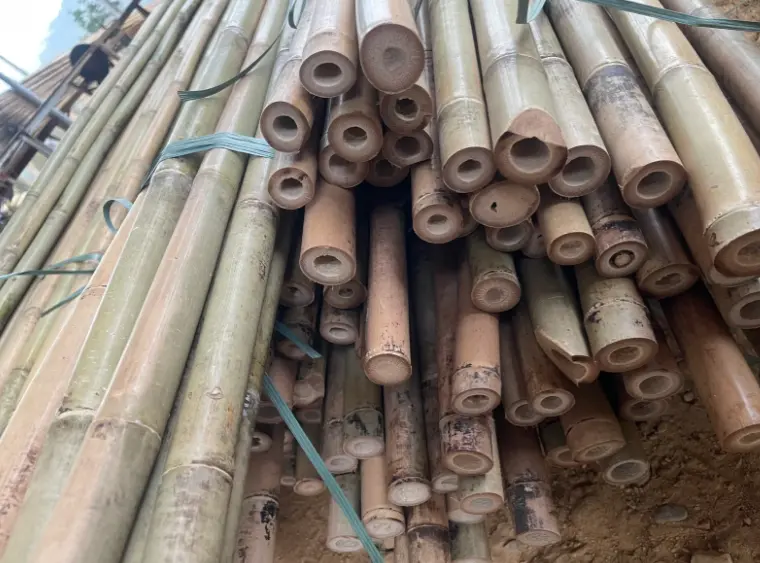
Tonkin Bamboo in the International Market
In the international bamboo trade, the term “Tonkin Bamboo” is commonly used in product listings for certain types of bamboo canes from China. Buyers should note that trade names do not always provide complete information about the botanical species or growing origin.
For this reason, we recommend checking the actual raw material source and product specifications rather than relying on the product name alone.
Huaiji tea-stalk bamboo is recognized for several natural characteristics:
- Straight and relatively uniform culms
- Thick bamboo walls
- Smooth surfaces and relatively flat nodes
- Good toughness and elasticity
- Natural resistance to insect damage and decay
These characteristics have made this bamboo traditionally suitable for various products, including poles, garden structures, and other applications requiring strength and flexibility.
Other bamboo-producing regions, including Zhejiang and Jiangxi, also have abundant bamboo resources and different varieties used for industrial and commercial purposes.
However, bamboo species should not be judged by geographical location alone. Buyers should understand the actual species and material specifications offered by each supplier.
2. Why Some Bamboo Canes Are More Prone to Insect Damage
One concern among bamboo cane buyers is insect infestation.
Bamboo is a natural material containing starch, sugars, and other organic substances. Certain insects can use these substances as a food source, which may lead to damage during storage or use.
The natural characteristics of the bamboo species can influence its susceptibility to insect attack. However, species is not the only factor.
Other important factors include:
- The maturity of the bamboo when harvested
- The natural density and structure of the bamboo
- The harvesting season
- Drying and processing methods
- Storage conditions before shipment
Huaiji tea-stalk bamboo has traditionally been valued for its resistance to insect damage. Nevertheless, no natural bamboo should be considered completely immune to insects under all conditions.
For buyers, it is therefore important to ask suppliers about both the bamboo species and their material preparation processes.
3. Bamboo Quality and Mold Resistance
Mold is another issue that can affect bamboo products, especially during transportation and storage.
Bamboo naturally absorbs moisture. When bamboo canes are stored in warm, humid environments with insufficient ventilation, mold may develop on their surfaces.
Several factors influence this risk:
Raw material: Different bamboo species have different physical and chemical characteristics.
Moisture content: Proper drying helps reduce the conditions that encourage mold growth.
Processing: Appropriate preparation and treatment can help improve product stability.
Storage and packaging: Bamboo should be stored in dry, well-ventilated conditions. Packaging should also be suitable for the transportation environment.
This is why buyers should not evaluate bamboo quality only by looking at its color and surface appearance when receiving samples.
4. Why Cheaper Bamboo Canes Are Not Always the Most Economical Choice
When comparing quotations from different suppliers, buyers may notice significant price differences between bamboo canes that appear similar.
A lower price may result from differences in raw material costs, bamboo species, harvesting areas, processing methods, labor costs, and product specifications.
However, a lower purchase price does not necessarily mean better overall value.
For example, if bamboo canes have inconsistent diameters, poor straightness, a higher defect rate, or greater susceptibility to damage during storage, buyers may face additional costs from sorting, replacement, customer complaints, and product returns.
For wholesalers and distributors, consistent quality is particularly important because the same product specifications need to be maintained across repeated orders.
Instead of comparing prices alone, buyers should consider the total value of the material and its suitability for the intended application.
5. What Should Buyers Check Before Purchasing Bamboo Canes?
Before placing a bulk order, we recommend checking the following points:
- Bamboo species and origin: Ask the supplier what type of bamboo is used and where the raw material comes from.
- Harvesting maturity: Confirm that mature bamboo is selected for production.
- Straightness and strength: Check whether the canes are suitable for their intended plant-support applications.
- Surface and color: Inspect the surface for cracks, insect holes, mold, and inconsistent appearance.
- Drying and storage: Ask how the bamboo is dried and protected before shipment.
- Quality consistency: Request samples and confirm the specifications before ordering in bulk.
A reliable supplier should be able to explain the raw materials and quality inspection procedures clearly.
6. Why Raw Material Selection Matters at XIESHI
We understand that the quality of bamboo canes begins with the selection of raw materials. At XIESHI, Consistent raw material is an important factor in maintaining bamboo cane quality for wholesale supply. We focus exclusively on bamboo materials from Zhaoqing, Guangdong, China.
We believe consistent raw material sourcing is an important part of maintaining product quality. Welcome to see more of our bamboo sticks for plant support.
For wholesale buyers and distributors, knowing where the bamboo comes from is an important step in choosing a reliable supplier.
We pay attention to bamboo maturity, straightness, surface condition, dimensions, and overall appearance during production. Our quality inspection process includes manual checks to help maintain consistent specifications and reduce defects.
We supply natural and colored bamboo sticks for gardening, greenhouse, and agricultural plant support applications. Different lengths, diameters, and colors can be customized according to customer requirements.
For overseas wholesalers and distributors, choosing the right bamboo material is an important step toward building a reliable product supply.
Conclusion
Bamboo cane quality is influenced by more than price or appearance.Bamboo species, growing origin, natural characteristics, harvesting maturity, processing, and storage all play important roles.
For buyers comparing bamboo canes from different suppliers, understanding the raw material is just as important as checking the final product.
A well-selected bamboo cane can offer better consistency and suitability for its intended application, helping buyers make more informed purchasing decisions.